
Native perennials are an important part of healthy pollinator habitats and native plant landscapes. These long-lived plants return year after year, providing nectar, pollen, and shelter for a wide range of beneficial insects and wildlife.
At Magical Sprouts Nursery, we focus on native plants that grow well in Tennessee and the surrounding Southeast region, including nearby areas of Georgia and Alabama.
Our native perennial collection is just beginning. We currently offer Tennessee Coneflower, a unique Tennessee native wildflower with an important conservation story.
Tennessee Coneflower
(echinacea tennesseensis)
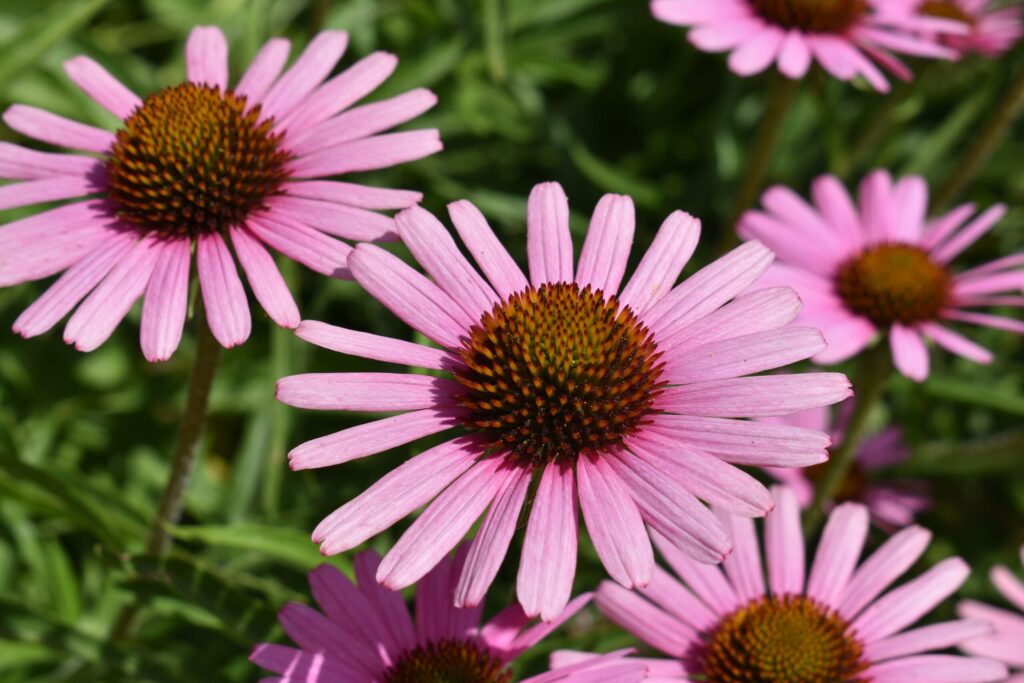
Tennessee Coneflower is a rare perennial wildflower native to the cedar glades of Middle Tennessee. Once listed as a federally endangered species, conservation efforts helped restore natural populations, and the plant was removed from the endangered species list in 2011.
This compact native coneflower produces pink-purple flowers with upright petals surrounding a spiny central cone. The blooms appear in early to mid-summer and attract a wide variety of pollinators, including native bees, butterflies, and other beneficial insects.
Growing conditions
- Size: 1 to 2 feet tall and wide
- Light: full sun
- Soil: well-drained soils, prefers lean or rocky soil
- Water: average water during establishment, drought-tolerant once established
- Bloom time: early to mid-summer
- Lifecycle: perennial
Planting instructions
- Plant in spring or fall when the temperatures are mild
- Choose a location with full sun and well-drained soil
- Dig a hole slightly wider than the root ball and set the crown level with the soil surface
- Space plants 18–24 inches apart
-
Water thoroughly during the first growing season to help establish roots
care
Tennessee Coneflower is naturally adapted to the rocky cedar glade habitats of Middle Tennessee and performs best in sunny areas with well-drained soils. It prefers soils that are not overly rich and can tolerate heat and dry conditions once established.
Very little maintenance is required once plants are established. Deadheading spent flowers can encourage additional blooms, though leaving seed heads in place can provide food for birds and winter interest in the garden.
Although native to Tennessee, this species can grow successfully in nearby parts of northern Georgia and northern Alabama with similar growing conditions.
pairing native perennials with milkweeds
Tennessee Coneflower pairs beautifully with native milkweeds in pollinator gardens. While milkweeds provide essential host plants for monarch caterpillars, flowering perennials like Tennessee Coneflower provide nectar for butterflies, bees, and other pollinators. Planting both together helps create a more complete pollinator habitat.
You can explore our collection of native milkweed plants here: 👉 Native Milkweed Plants