
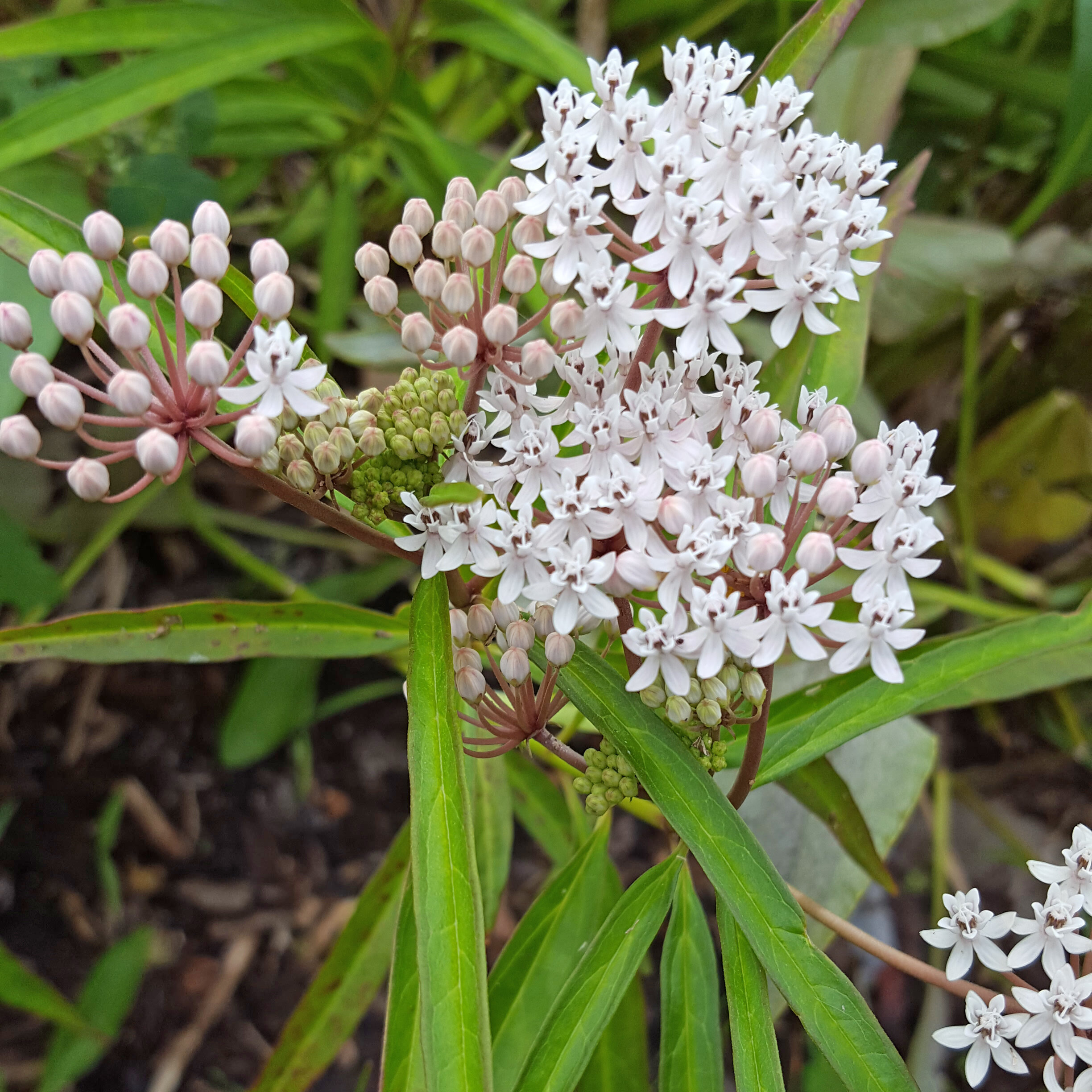
 Aquatic Milkweed (Asclepias perennis)
Milkweed is the essential host plant for monarch caterpillars and a nectar source for many pollinators. All of our milkweeds are hardy perennials that return year after year once established.
plant profile
Aquatic Milkweed is a moisture-loving native perennial with bright green foliage and delicate clusters of white to pale pink flowers. Unlike most milkweed species, it naturally grows in wet habitats including marshes, floodplains, wet ditches, and along the edges of streams and ponds. Its ability to thrive in consistently moist soil makes it an excellent choice for rain gardens and other wet areas of the landscape.
Growing conditions
- Size: 1 to 2 feet tall, 1 to 2 feet wide
- Light: Full sun to partial shade
- Soil: Moist to wet soil; adaptable to periodically saturated conditions
- Water: High; prefers consistently moist soil and tolerates wet conditions
- Bloom time: Late spring through early fall
- Lifecycle: Perennial
Planting instructions
- Plant in spring or fall when the temperatures are mild.
- Dig a hole slightly wider than the root ball and set the crown level with the soil surface.
- Space plants 12–24 inches apart.
- Water thoroughly after planting and keep the soil consistently moist, especially while the plant becomes established.
-
Choose a naturally moist location such as a rain garden, pond edge, or other area that does not dry out for extended periods.
seasonal growth pattern
- Year 1: Establishes its root system and develops leafy growth. Under favorable conditions, young plants may flower during their first growing season
- Year 2: Produces stronger growth and more reliable flowering as the plant becomes established.
- Year 3 and beyond: Returns each spring and produces clusters of white to pale pink flowers throughout its growing season.
- Fall & Winter: Seed pods mature and release seeds that lack the fluffy pappus found on most milkweed seeds. The seeds are adapted to float and disperse by water. Above ground growth dies back with cold weather and returns from the roots in spring.
care
Aquatic Milkweed performs best where the soil remains consistently moist and can tolerate periods of very wet or saturated soil. Unlike many milkweed species, it should not be allowed to remain dry for extended periods. It grows well in full sun but can also perform well in partial shade. In naturally wet locations, established plants generally require little additional care.
notes
- Naturally adapted to marshes, floodplains, wet ditches, and stream or pond edges.
- An excellent choice for rain gardens and other consistently moist areas.
- Seeds lack the fluffy pappus typical of most milkweeds and are adapted to float on water.