
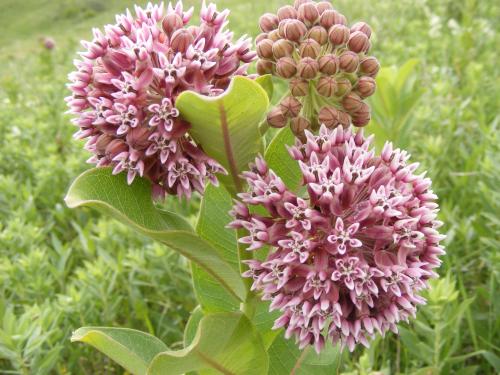
 common milkweed (Asclepias syriaca)
Milkweed is the essential host plant for monarch caterpillars and a nectar source for many pollinators. All of our milkweeds are hardy perennials that return year after year once established.
plant profile
Common Milkweed is considered the classic milkweed of fields and roadsides. A tall perennial with broad leaves and large, fragrant clusters of pink to purple flowers. Extremely important as a monarch host plant.
Growing conditions
- Size: 3 to 6 feet tall, 2 to 4 feet wide
- Light: full sun
- Soil: medium soils, tolerates a wide range
- Water: average moisture, drought-tolerant once established
- Bloom time: mid-summer, starting the second year
- Lifecycle: perennial
planting instructions
- Plant in spring or fall when temperatures are mild
- Dig a hole slightly wider than the root ball and set the crown level with the soil surface
- Space plants 24–36 inches apart
- Water thoroughly after planting
seasonal growth pattern
- Year 1: Establishes deep roots; no blooms.
- Year 2: Blooms begin; rhizomes may start spreading.
- Year 3 and beyond: Tall stems and abundant blooms; colony expansion continues.
- Fall & Winter: Seed pods split to release silky seeds; leave stems for overwintering insects.
care
Best in open spaces where it can spread. Not suited for containers, as it grows by underground rhizomes. Give it room, or plant where spreading is welcome.
notes
- Does not bloom the first year while roots develop
- Fragrant blooms attract many pollinators
- Can form colonies, so expect spreading over time