
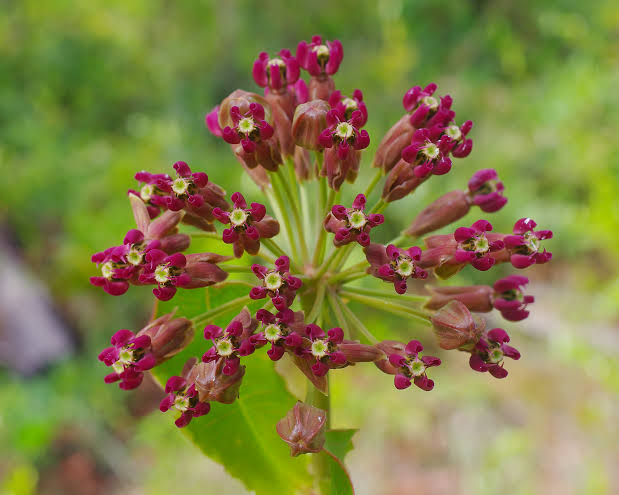
 clasping milkweed (Asclepias amplexicaulis)
Milkweed is the essential host plant for monarch caterpillars and a nectar source for many pollinators. All of our milkweeds are hardy perennials that return year after year once established.
Spring 2027 Availability: This is a new species we are working to propagate for Spring 2027. Availability will depend on successful germination and growing conditions.
plant profile
Clasping Milkweed is a distinctive native perennial named for its broad, wavy leaves that wrap around, or “clasp,” the stem. It produces fragrant clusters of pink to purple flowers and naturally grows in dry, open habitats, including fields, sandy areas, and open woodlands. Its unusual foliage and showy flowers give it a very different appearance from many other milkweed species.
Growing conditions
- Size: 1 to 4 feet tall, 2 to 3 feet wide
- Light: Full sun to partial shade
- Soil: Well drained; prefers sandy or rocky soils
- Water: Low to moderate; drought tolerant once established
- Bloom time: Late spring through summer
- Lifecycle: Perennial
planting instructions
- Plant in spring or fall when temperatures are mild.
- Dig a hole slightly wider than the root ball and set the crown level with the soil surface.
- Space plants 18–24 inches apart and allow additional room for the colony to spread over time.
- Water thoroughly after planting and regularly while the plant becomes established. Reduce supplemental watering once established.
-
Choose a location with well drained soil and good sun exposure.
seasonal growth pattern
- Year 1: Establishes its root system and produces upright leafy growth. Flowering may be limited while the plant becomes established.
- Year 2: Produces stronger growth and more reliable flowering
- Year 3 and beyond: Returns reliably each spring with established growth and seasonal blooms
- Fall & Winter: Seed pods mature and split to release wind dispersed seeds. Above ground growth dies back for winter and returns in spring.
care
Clasping Milkweed performs best in sunny locations with well drained soil and is particularly well suited to sandy or rocky conditions. Once established, it is drought tolerant and generally requires little supplemental watering. Avoid consistently wet or poorly drained locations.
notes
- Broad, wavy leaves clasp the stem, giving the milkweed its common name.
- Produces fragrant clusters of pink to purple flowers.
- Drought tolerant once established.
- Naturally adapted to dry, open habitats and sandy or rocky soils.